 Fardel
Blog · Money
Travel budget per day: how to plan it and keep to it
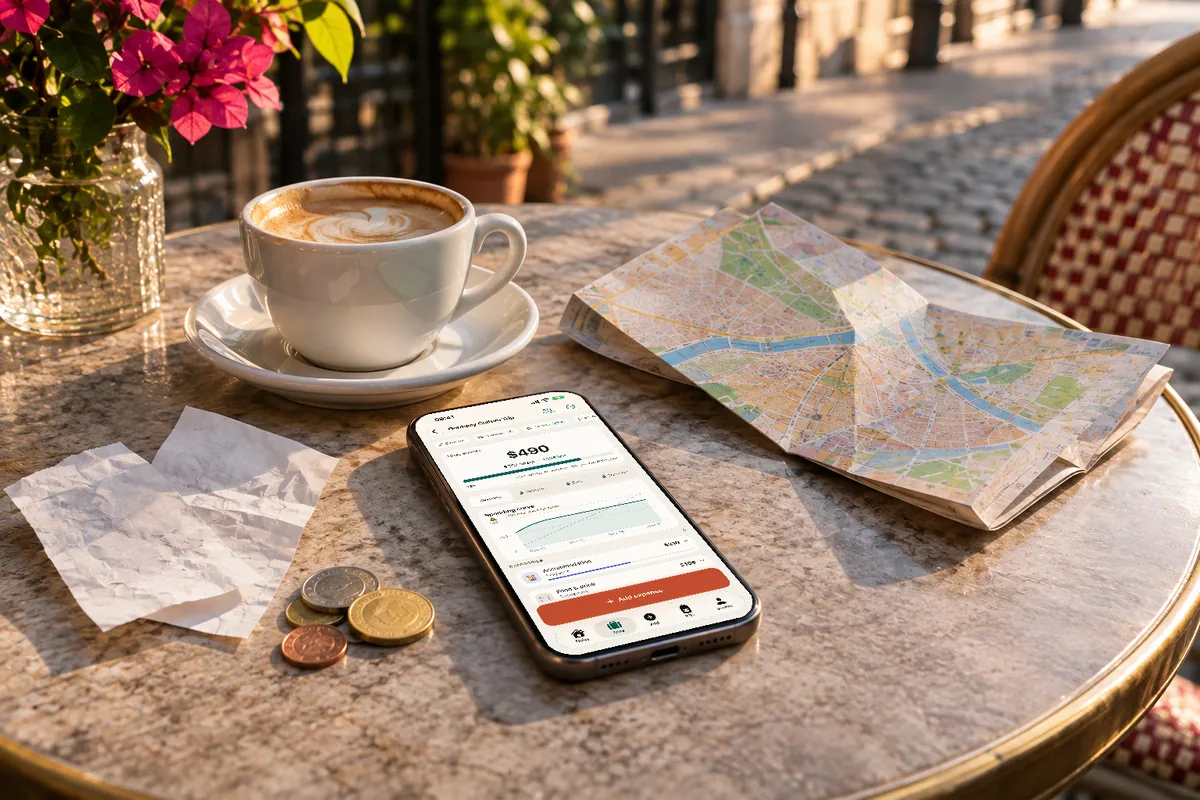
Take the total you want to spend, set aside what is already paid (flights, the hotel, the car), and divide what is left by the number of days: that is your daily budget. Then, once the trip starts, ask two questions each evening. Have I spent more than I should have by today? And how much is left for each remaining day, today included?
Those two questions are the whole method. The rest of this page is how to set the numbers up so they mean something, with a worked example, and how Fardel's budget screen answers both questions for you.
Step 1: split what is paid from what is daily
A trip budget mixes two kinds of money, and a daily figure only makes sense for one of them.
- Paid before you go, or once: flights, accommodation, a rental car, tickets bought in advance.
- Spent day by day: food and drink, local transport, sights and museums, nightlife, shopping, data, tips and small fees.
Fardel's expense categories make a useful checklist for the second list: Accommodation, Transport, Food & drink, Sights & museums, Nightlife & fun, Shopping, Connectivity & data, Health & pharmacy, Tips & fees and Other.
Then decide what your budget holds: the whole trip, or only the day-by-day spending. Both work, as long as you know which one you are looking at. A daily figure only makes sense for the second kind, so the example below works it out from what is left once the big items are paid.
Step 2: turn the rest into a daily figure
Decide the total, take away what is already paid, and divide by the days. With made-up numbers, in any currency:
| Amount | |
|---|---|
| Total for the trip | 2,400 |
| Already paid: flights and hotel | 800 |
| Left for daily spending | 1,600 |
| Days | 8 |
| Daily budget | 200 |
There is no correct daily amount that fits everyone; it depends on the place, the season and how you travel. What helps is choosing it on purpose before you leave, rather than discovering it on the last day.
Step 3: check your pace against today, not the total
An easy mistake is to compare what you have spent with the whole budget. On day three of eight, having spent 750 of 1,600 sounds fine: less than half is gone. But by the end of day three you "should" have spent three eighths of it, 600. You are 150 ahead of plan.
That is how Fardel measures pace: it compares everything logged in the budget with an even share of the budget for each day that has passed, today included. A difference within 2 % of the budget counts as on track, so a single coffee does not set off a warning. Otherwise the budget screen says by how much you are over or under pace for today.
One consequence: if you log costs paid before the trip, such as the hotel, in the same budget, they count from the start, so pace reads high in the first days. The amount per remaining day, below, is unaffected: it is always what is left divided by the days to come.
Step 4: recalculate what is left per day, today included
Pace tells you where you stand; the next number tells you what to do about it. Divide what is left by the days still to spend, counting today.
In the example, at the end of day three:
| Amount | |
|---|---|
| Budget | 1,600 |
| Spent so far (3 days) | 750 |
| Left | 850 |
| Days still to spend, today included | 6 |
| Per remaining day | about 142 |
The plan said 200 a day; to finish on budget, the rest of the trip has about 142 a day. Fardel counts today as a day still to spend, because the money for today has not all gone yet. Before the trip it divides by every day; after the trip there is no per-day figure at all.
When you pay in another currency
Record each expense in the currency you paid in, and convert it into the budget's currency at the rate of that day. Fardel does this for you: each expense keeps the rate of the day it was logged, from Frankfurter (European Central Bank and other central banks), and your bank's or card's rate may differ. If a currency has no rate yet, the expense is left out of the total and listed under a warning until a rate arrives or you type one in, so the total is never quietly short.
Rates also move while you plan. When you set a budget, Fardel notes the day's rate for each currency of the trip; if one later moves by 4 % or more, the budget screen says so, with roughly how much more or less the same spending now costs, and offers to update the budget. For what each destination uses, see our currency by country table.
Habits that break a travel budget
- Logging days later. By the last evening nobody remembers the taxi on day two. Write it down when you pay.
- Comparing with the total. "Only half spent" on day three of eight is not good news; compare with today.
- Forgetting what was paid before. If the budget is meant to be the whole trip, a total without the flights and the hotel looks generous and is not what the trip cost.
- Mixing rates. Converting one expense at the day's rate and another at the rate on the day you got home makes the total match nothing you paid.
Frequently asked questions
How do I calculate a travel budget per day?
Take the total, subtract what is already paid, and divide by the number of days. During the trip, divide what is left by the days still to spend, today included.
How much should I budget per day for travel?
It depends on the destination, the season and how you travel, so we do not give a figure. Decide it before you go and check it each evening.
Should flights and hotels be in the daily budget?
In the trip's total, yes; in the daily figure, no. Work out the daily figure from what is left once they are paid.
What if I am already over budget halfway through?
Look at what is left per remaining day. It tells you what the rest of the trip can afford, which is more useful than how much you have overspent.
How do we budget a trip shared with friends?
Keep one budget for the trip and record who paid each cost and who shares it; our guide to splitting travel expenses walks through it.
How Fardel helps
Fardel's trip budget shows the total, what is spent and what is left, the average per day so far and the amount per remaining day, a spending curve against the ideal line, and a line saying whether you are over or under pace for today. Expenses are grouped by category, and while you are on the road the Today screen shows today's spending and the amount per remaining day. A budget is free on both plans; spending by country, by day and by traveller is part of Fardel Pro. Fardel is an iPhone app: Fardel on the App Store.
Sources
- Fardel app code, Sources/FardelCore/Logic/BudgetCalculator.swift (per-day and pace rules, read 2026-11-10)
- Fardel app code, Sources/FardelCore/Logic/RateMovement.swift and Resources/Content/travel.json (rateAlertPercent, read 2026-11-10)
- Fardel app strings, Sources/FardelCore/Resources/Strings (budget and expense category labels, read 2026-11-10)
- Fardel app data, Sources/FardelCore/Resources/Content/help.json (exchange rates and missing-from-total answers, read 2026-11-10)